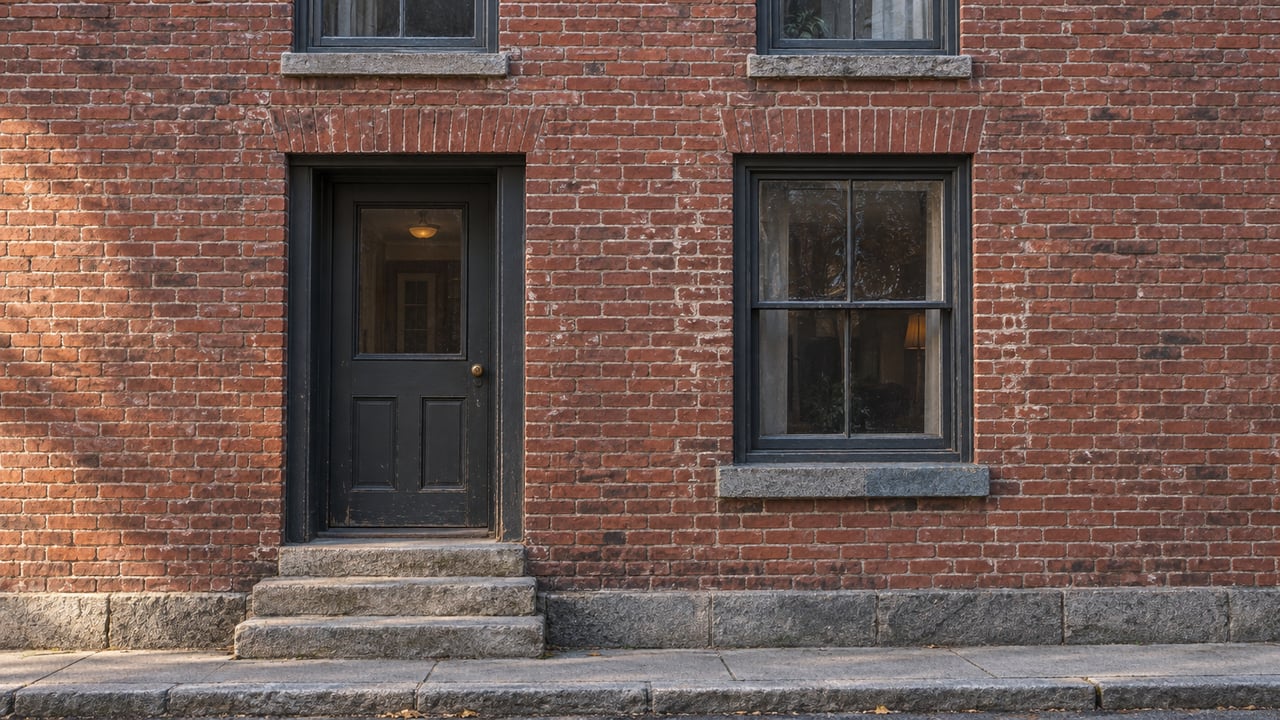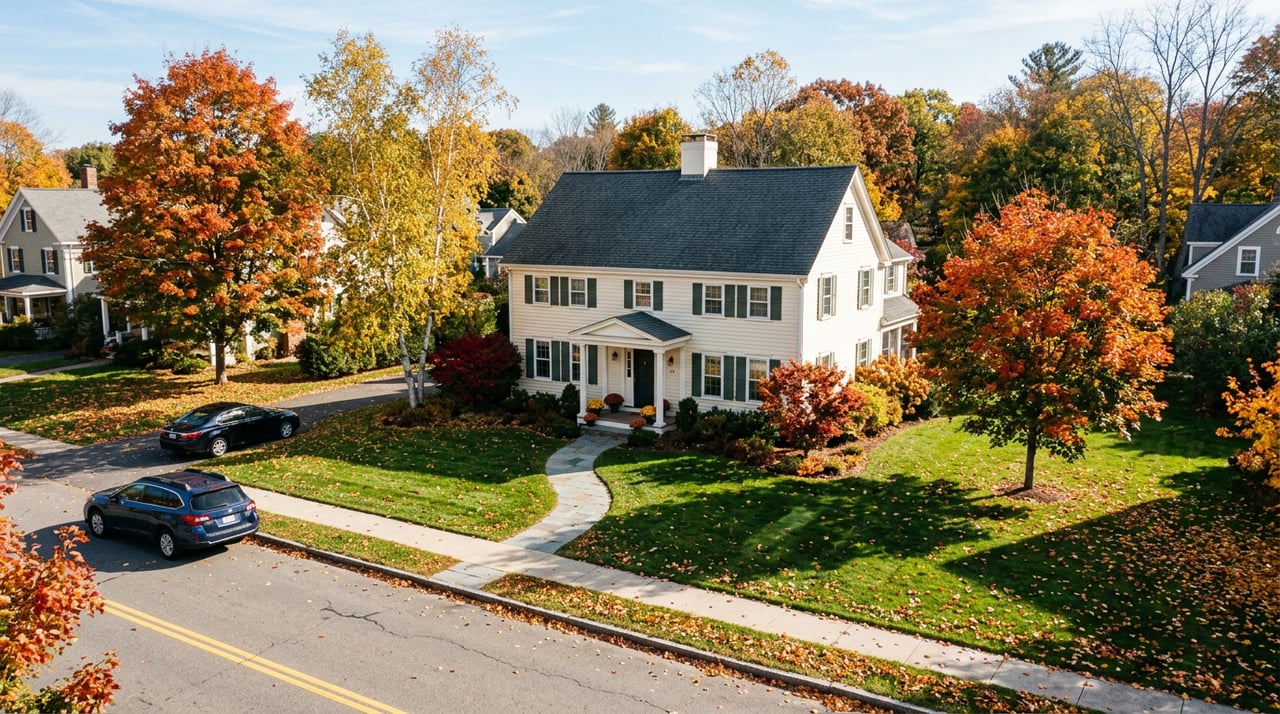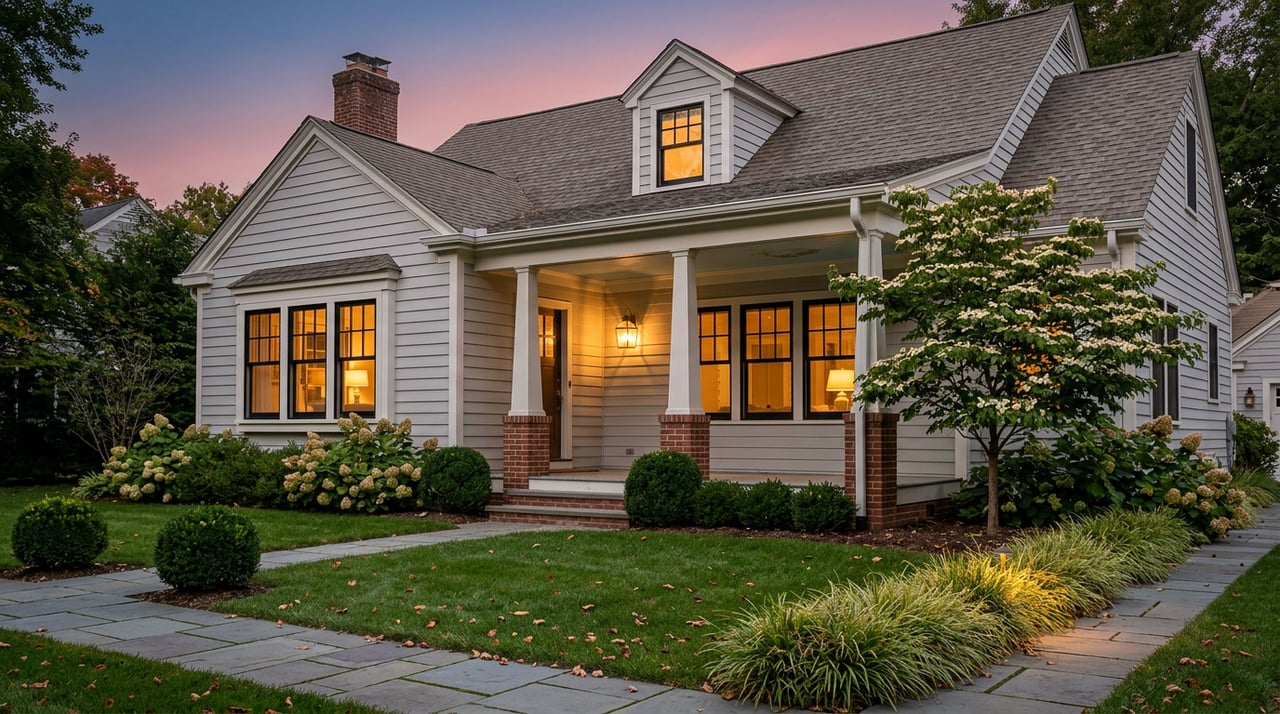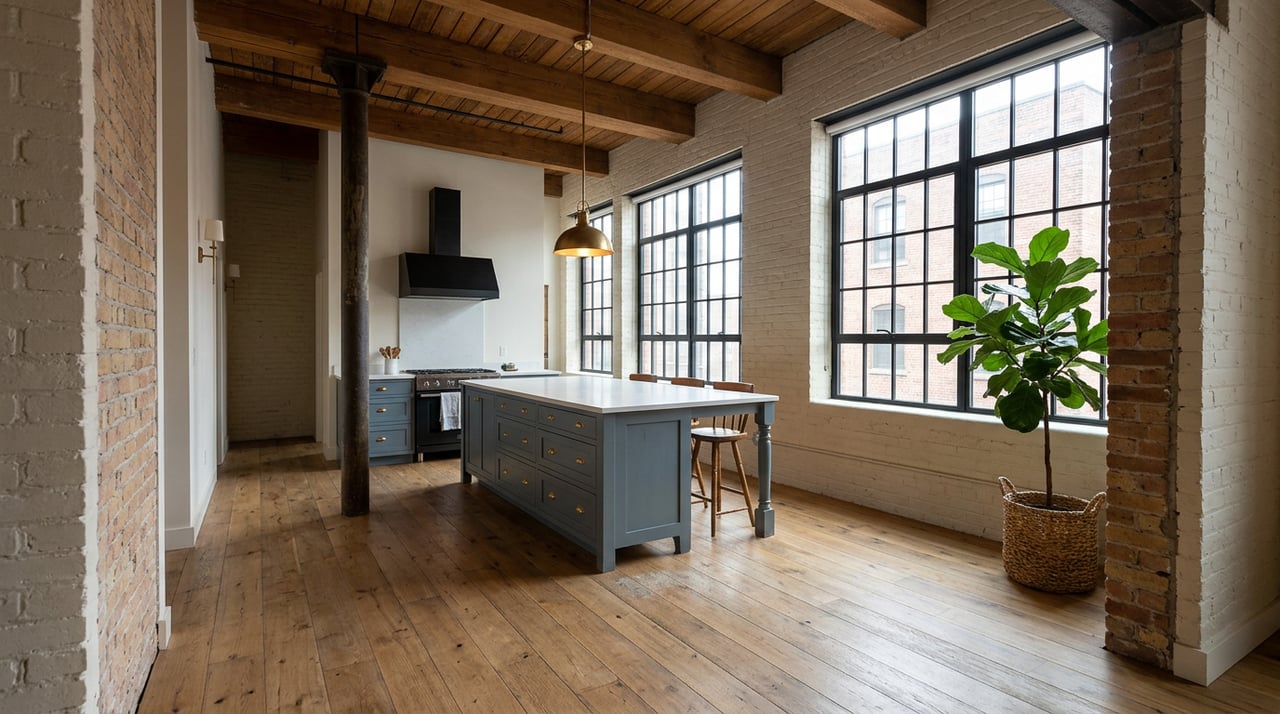
In 1890, a Harper's Weekly editor toured the Cheney silk mills in Manchester and called it "in many respects...the most attractive mill village in the country." He was struck by the neat rows of worker cottages, the absence of clutter, the sense that a company town could still feel like a real neighborhood. That description still holds up if you walk the Cheney Brothers National Historic Landmark District today. The brick mills still front Pine and Elm Streets. The worker cottages still climb the hills north and west of the complex. What's changed is what's happening inside those old buildings, and that change is quietly splitting Manchester's housing market into two different stories that happen to share a zip code.
The Number That Doesn't Match the Headline
If you've searched Manchester home prices recently, you've seen a version of the same headline everywhere: values up, market competitive, homes moving fast. Zillow put the town's average home value at roughly $316,700 to $323,500 through the first half of 2026, up about 4 percent over the prior year. Patch reported a median sale price near $312,700 in early 2026, with homes like a six-bedroom on Union Street closing at $555,000 and a one-bedroom condo on Oakland Street selling for $205,000, evidence of a market with room at both ends. Redfin's numbers through March 2026 painted a similarly hot picture: a Compete Score of 83 out of 100, homes averaging 14 days on market, several properties fielding multiple offers.
All of that is true, and none of it tells you the more useful thing. Look one layer deeper, at price per square foot broken out by property type, and the market stops moving as one unit. In recent weekly comparisons, list price per square foot for single-family homes in Manchester rose about 1.9 percent, while condos rose about 9.4 percent over the same stretch. That's not noise. That's two different demand curves wearing the same town name, and the mills are why.
Where the Apartments Are Coming From
The Cheney Brothers complex has been feeding Manchester's rental and condo supply for close to two decades, and the pace picked up again this year. The most recent addition: in July 2026, Manchester's Planning and Zoning Commission approved a plan to convert the former Fuss & O'Neill office building at 160 Hartford Road, itself once part of the Cheney mill complex, into 40 apartments. The developer, Spectra Construction and Development through its subsidiary WW Manchester LLC, purchased the roughly 30,800-square-foot building for $1.7 million in June 2026. The approved plan calls for 23 one-bedroom units and 17 two-bedroom units, some with loft space on the upper floor. Fuss & O'Neill had occupied the building for years before relocating its offices to Hartford in 2024, and the site now sits across from Lost Realm Craft Co., an upcoming brewpub that also recently cleared approvals for the same stretch of Hartford Road.
That project didn't start a trend. It joined one already running. A short list of what's already converted or under construction inside the district:
- The Yarn Dye House, built in 1914, sat vacant for decades before a 2009 renovation turned the 89,000-square-foot building into 57 affordable housing units, a $14 million project that preserved the original 22-foot ceilings.
- The Clocktower and Velvet Mill Apartments, spread across buildings on Elm Street, currently list one- to three-bedroom units from about $1,430 to $1,955 a month, with select loft layouts inside the old mill floors.
- The Clark Building at 160 Hartford Road, approved for 40 units in July 2026, is the newest addition to that pipeline.
Every one of these projects adds rental or condo-style supply to the same 175-acre footprint. That's the engine behind the 9.4 percent condo price growth. It's investor and renter demand concentrating in a specific product type, in a specific place, for a specific reason: there's a steady supply of atmospheric, amenity-rich mill space coming onto the market, and it's pulling comparable pricing up with it.
Two Different Purchases Hiding Behind One Zip Code
Here's where it matters for a buyer trying to make sense of what Manchester actually offers. Someone searching "Manchester CT condo" and someone searching "Manchester CT historic home" are not competing for the same inventory, and they're not exposed to the same market forces.
| If you're buying a converted mill unit | If you're buying a Cheney worker cottage |
|---|---|
| You're buying into a growing, investor-competitive segment, the one driving that 9.4 percent price-per-square-foot growth | You're buying into the segment growing at under 2 percent, closer to the town's overall pace |
| Comparable units nearby are new construction or recent conversions, which sets your appraisal ceiling | Comparable units are frame cottages built between 1850 and 1920, so appraisal comps depend on how many similar sales the district has produced recently |
| Amenities and finish level are set by the developer and unlikely to change without HOA-style consensus | Renovation choices are yours, but exterior work falls under the advisory eye of a district commission |
| Rental competition from newly delivered units is a real factor if you're buying to lease | Rental competition doesn't apply the same way, since you're not competing with a leasing office next door |
Neither path is better. They're just different bets, and the market data conflates them if you only look at the townwide median.
The Friction Nobody Puts in the Listing
If you're the buyer eyeing one of the roughly 275 original Cheney worker cottages, there's a detail worth knowing before you write a renovation budget. The district sits under the advisory purview of the Cheney Brothers National Historic Landmark District Commission, established by the Town of Manchester in 1978. Its role, according to the town's own description, is to build awareness of the district's historic character and to advise property owners on appropriate renovation and restoration of structures within it.
That word, advisory, matters. This isn't a zoning board that can block your project outright. It's a body designed to weigh in on exterior choices, the kind that affect whether a cottage still reads as part of the district's original architectural fabric, things like siding, window replacement, and additions visible from the street. Interior renovations, kitchens, baths, the things that actually move a sale price, aren't the commission's focus. But if your plan for a Cheney cottage includes new vinyl siding or a full-width dormer, it's worth a conversation with the town before you assume the same latitude you'd have on a non-historic street a mile away. This is the kind of friction that never shows up in a portal listing and often surprises a buyer mid-renovation rather than before closing.
What This Means If You're Comparing Manchester to Somewhere Else
Manchester still reads as one of the more affordable towns in the region, and that part of the headline hasn't changed. A median sale price in the low $300,000s, as reported through early 2026, still buys meaningfully more house than comparable inventory closer to Hartford's core or along the shoreline. What's shifted is the reason prices are moving. In a lot of Connecticut towns, appreciation is a story about limited land and steady demand. In Manchester's historic core, it's also a story about a 175-acre mill complex that keeps finding new buildings to convert, and a rental market that keeps absorbing what comes online.
If you're comparing Manchester to another town on your list, the useful question isn't just "what's the median price." It's "what's actually driving that median here." In this case, part of the answer is sitting in a mill building on Elm Street with a pool and loft-style units starting under $1,500 a month, and part of it is sitting in a 19th-century cottage with a commission quietly reviewing what happens to its front porch.
FAQ
Does buying a home in the Cheney Historic District mean I need approval to renovate? The district's commission is advisory, not regulatory. It reviews and weighs in on exterior renovation and restoration, particularly changes visible from the street, but it does not function as a zoning board with veto power over your project. Interior work generally falls outside its scope.
Are the mill apartment conversions pushing up prices for single-family homes in the district too? The data through early 2026 doesn't show that clearly. Single-family price per square foot has grown at a much slower pace than condo pricing over the same period, which suggests the mill conversions are mostly affecting the rental and condo segment rather than lifting single-family values across the board.
If you're weighing a purchase inside Manchester's historic core, whether that's a loft in a converted mill or a cottage that's been in the same family for generations, it helps to have someone who can walk you through which market you're actually stepping into. Natalie Zoef works across Connecticut's residential, investment, and historic-property transactions and can help you sort out which side of Manchester's split market fits what you're trying to do. Let's Connect.